
The Verse That Changed Everything
How 1 Corinthians 2:8 rewired the way I read the entire Bible — and sent me on a journey I never saw coming.

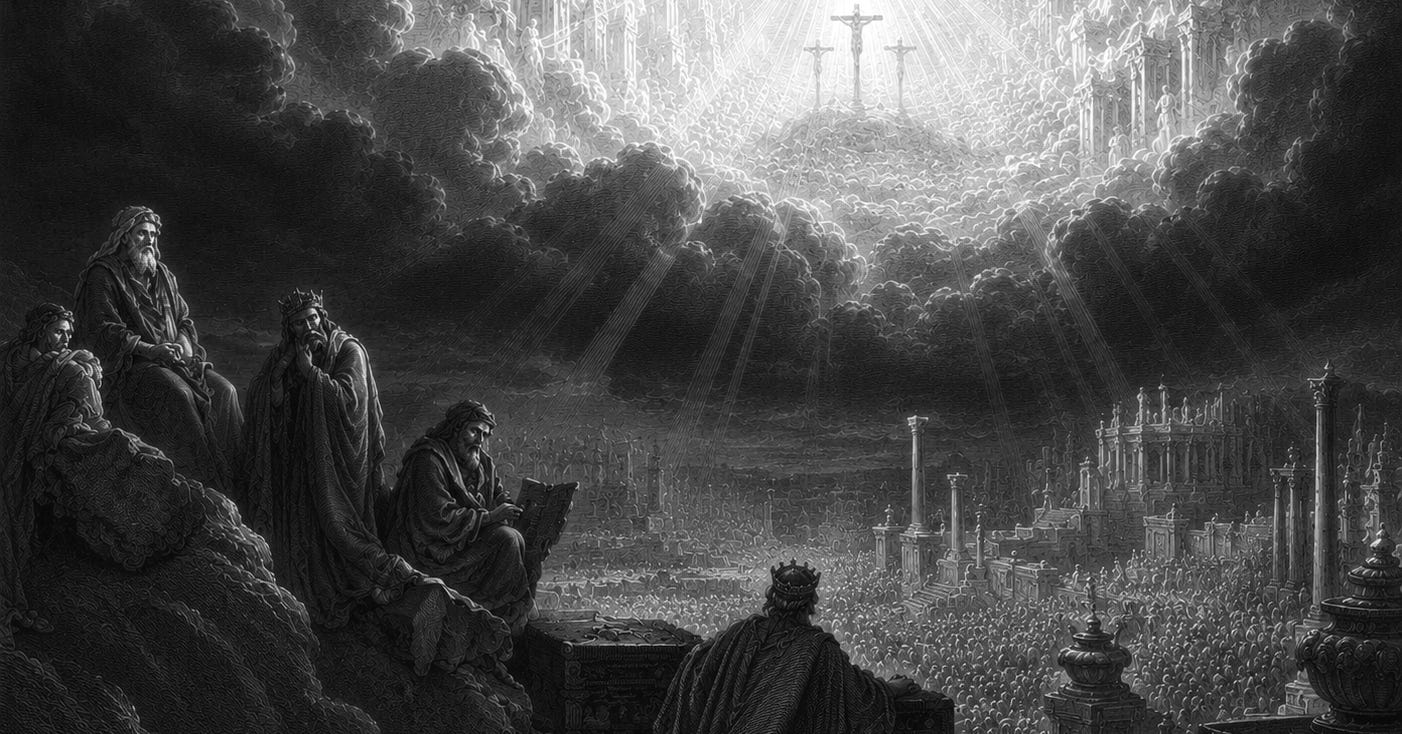
I was twelve years old the first time I understood what it meant to need a Savior.
It was my first youth camp. We were deep in southwestern Pennsylvania for white-water rafting on the Youghiogheny River. During an evening session, the group gathered around a massive campfire. My Youth Pastor, Scott, was delivering the message, and somewhere in the middle of it he started talking about sin and the conviction of the Holy Spirit. Something shifted in me. I realized that conviction — that deep, interior knowing that something was wrong — was exactly what had been missing from my life. I hadn’t felt it before that night.
I felt it then.
When the invitation came, I got on my knees in the grass and surrendered to Christ.
That was 1998. I was twelve years old, and I had no idea what I was stepping into.
Fast forward through the rollercoaster of life to March of 2025.
I’m sitting with my Bible open, working through a chronological “read through the Bible in year” plan I’d been following for daily study. I came across a cross-reference that sent me flipping to 1 Corinthians. After reading the referenced verse, my gaze just landed there as my eyes finished scanning the page. And then I saw it. A verse I had highlighted the year before, sitting there like it had been waiting for me:
“None of the rulers of this age understood this, for if they had, they would not have crucified the Lord of glory.”
1 Corinthians 2:8
I’ve heard it said that some verses hit you like a freight train. This one did. Not because it was new to me — I had highlighted it, after all. But something about that morning, that moment, that particular intersection of where my mind had been living in the chronological narrative of Scripture — it cracked something open.
I sat with the implications.
The rulers of this age. Paul wasn’t talking about Pilate and Herod, though they played their parts. He was pointing to something behind the curtain — cosmic intelligences, hostile powers who had been working against the purposes of God since long before Rome existed. Powers who had strategized, schemed, and maneuvered across centuries of human history to prevent exactly this moment.
And they missed it.
They didn’t just lose. They were outwitted. The crucifixion — which appeared to be the enemy’s greatest victory — was actually the moment the trap closed. The cross wasn’t a defeat. It was an ambush.
I couldn’t stop thinking about it. If that’s true — if the powers behind history spent millennia trying to prevent the Messiah and then triggered their own destruction by crucifying Him — then what does the rest of the biblical narrative look like through that lens? What were they doing in Genesis? In the Flood? In the tower of Babel? In Egypt, Assyria, Babylon, Persia, Greece, Rome?
One verse. One morning. And the entire sweep of Scripture began to reorganize itself around a question I couldn’t let go of.
Seven months later, in late October of 2025, I attended BlurryCon3.
BlurryCon is the annual conference hosted by the Blurry Creatures podcast — one of the most significant voices in the biblical cosmology and supernatural worldview space. If you’re new to that world, think of it as a gathering of people who have dared confront the stranger, harder, more cosmic dimensions of the biblical text — the Divine Council, the Nephilim, the principalities and powers behind human history — and found they couldn’t look away. It was my first time attending, and I brought my oldest son Noah with me. How I found my way into that community is a story for another post.
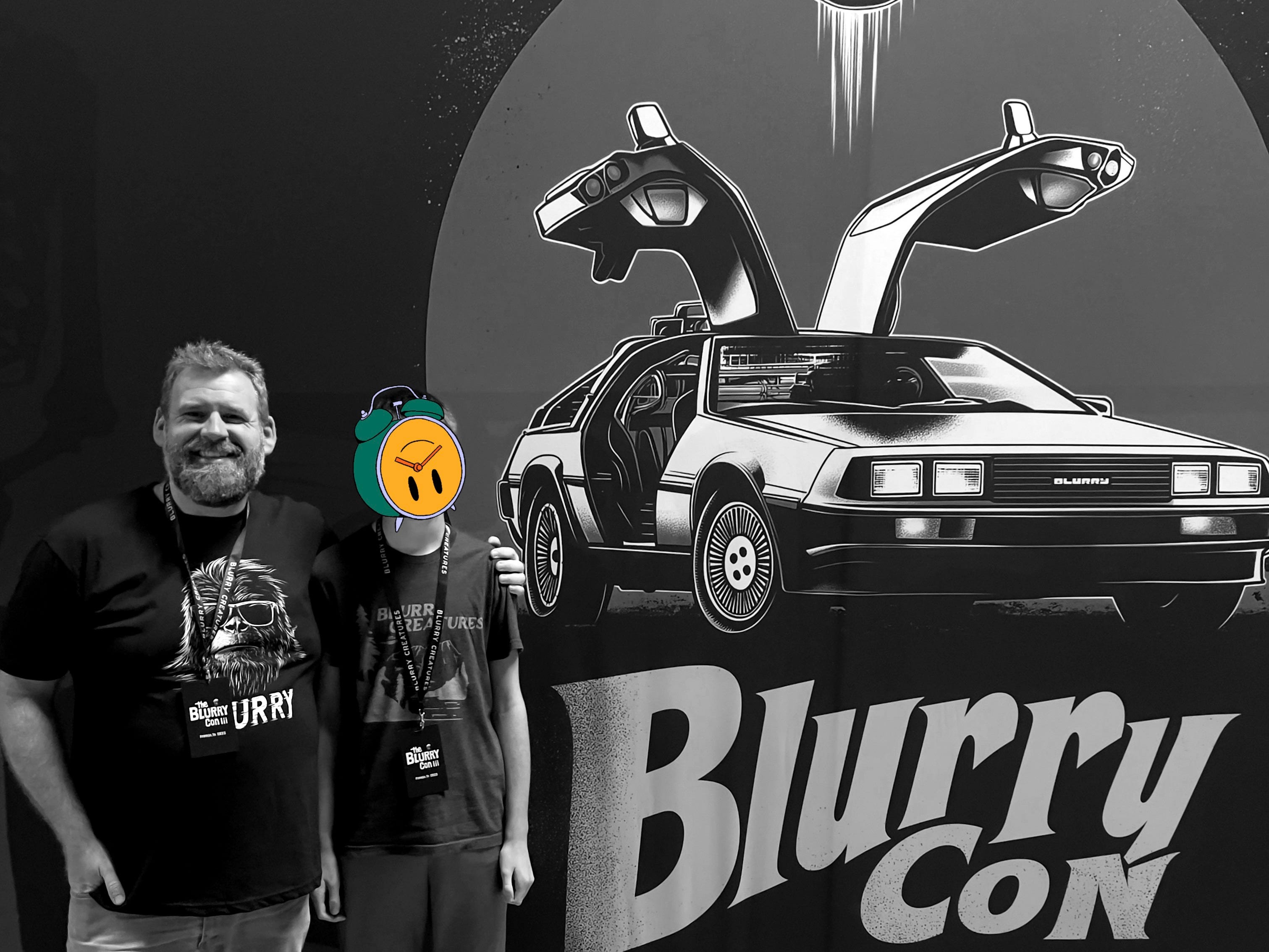
For the most part, the conference was exactly what I expected to be: a full slate of speakers and voices ranging from musicians, podcasters, historians, pastors, and theologians. While the atmosphere overall was lighthearted (it was Goonies themed 💀), it was also filled with several moving moments, from thunderous teaching from Doug Van Dorn to witnessing a miraculous healing. Despite all of the events that happened there, I came expecting pretty much what I got.
I left with something else entirely.
Throughout the conference, something began stirring that I can only describe as an urge — a quiet but persistent sense that I was supposed to do something with what I’d been given. Not just read. Not just study.
Write.
On the way out, I turned to my son and said words I hadn’t planned to say:
“Noah, I think I’m going to write a book.”
Two and a half months later, I had completed the first draft of The Ancient Wars, Vol. 1: From Cain to Caesar — just over 100,000 words tracing the cosmic war behind the biblical narrative from Eden to the birth of Christ.
All of it — every chapter, every argument, every late night at the desk — flowing from a single verse I glanced at on a Tuesday morning in March.
This Substack is where I’ll be thinking out loud about everything the book couldn’t hold — the deeper dives, the questions readers are asking, the material already building toward what comes next.
If you’re new here, The Ancient Wars, Vol. 1 is available now on Amazon. If you want a taste before you commit, the first chapter is available free — just subscribe and you’ll find it waiting for you.
And if you’ve already read it — stay close. There’s more coming. A lot more.
The next post goes somewhere I suspect many of you have wondered about but rarely heard taught straight: what the Garden of Eden actually was — and why the answer changes everything about the war that started there.
No spam. Just the war.
Josiah Sill is the author of The Ancient Wars and the founder of Remnant Flame Press. He lives in Maryville, Tennessee with his wife Jessica and their sons.
Really enjoyed this first post, Josiah. Glad to be able to get on your substack at the beginning. Thanks for linking to it from the Alberino community.